
Choosing Between FRP and Aluminium: Understanding Material Properties
In the realm of material selection for structural components, the debate between Fiberglass Reinforced Plastic (FRP) and Aluminium often surfaces. Both possess distinct qualities that cater to diverse needs, be it corrosion resistance, strength, stiffness, impact resistance, or environmental impact. Let’s delve into the core differences between these materials to help you make an informed decision for your projects. Corrosion Resistance: FRP exhibits impressive resistance to a broad spectrum of chemicals and remains unaffected by moisture. However, direct exposure to UV rays necessitates painting. On the other hand, Aluminium boasts excellent corrosion resistance in seawater and saline atmospheres. It can be further fortified through anodizing or coatings, unlike FRP, which is vulnerable to UV exposure due to its composite nature. Strength and Stiffness: While FRP holds good strength along the length of its fibers, its flexural strength remains lower than Aluminium. The direction of fiber alignment dictates FRP’s strength, making its true capacity challenging to determine accurately. Aluminium, being a homogeneous metal, offers higher flexural strength and retains elasticity after loading and unloading, unlike FRP, which tends to remain in a plastic stage upon loading. Impact Resistance: FRP’s inability to absorb impact load stands in contrast to Aluminium’s superior resistance. The latter, although occasionally deforming under extreme impact, typically remains in its elastic stage without entering the plastic stage, making it more resilient. Environmental Impact: Here’s a significant differentiator: FRP, being a petro-based polymer resin, isn’t biodegradable, posing a threat to the environment. Conversely, Aluminium, a naturally occurring metal, is biodegradable, making it a greener choice. Other Factors: In terms of installation, Aluminium triumphs due to ease, while FRP may demand more time due to its span limitations. Additionally, Aluminium boasts negligible maintenance compared to FRP, which requires more attention due to its vulnerability to UV rays. Conclusion: Considering their unique attributes, both FRP and Aluminium have their place in various applications. For short-term projects requiring corrosion resistance and moderate strength, FRP might suffice. In contrast, Aluminium stands as a durable, environmentally friendly option with higher strength and longevity, making it a superior choice for long-term structural requirements. Understanding the intricacies of these materials helps in making informed decisions tailored to specific project needs. So, when selecting between FRP and Aluminium, weigh these factors judiciously to achieve the desired performance and durability for your project.
“Shading the Future” : SolTree by West Coast Engineering Works- Revolutionizing Sustainable & Renewable Energy at Godrej Vikhroli,Mumbai.
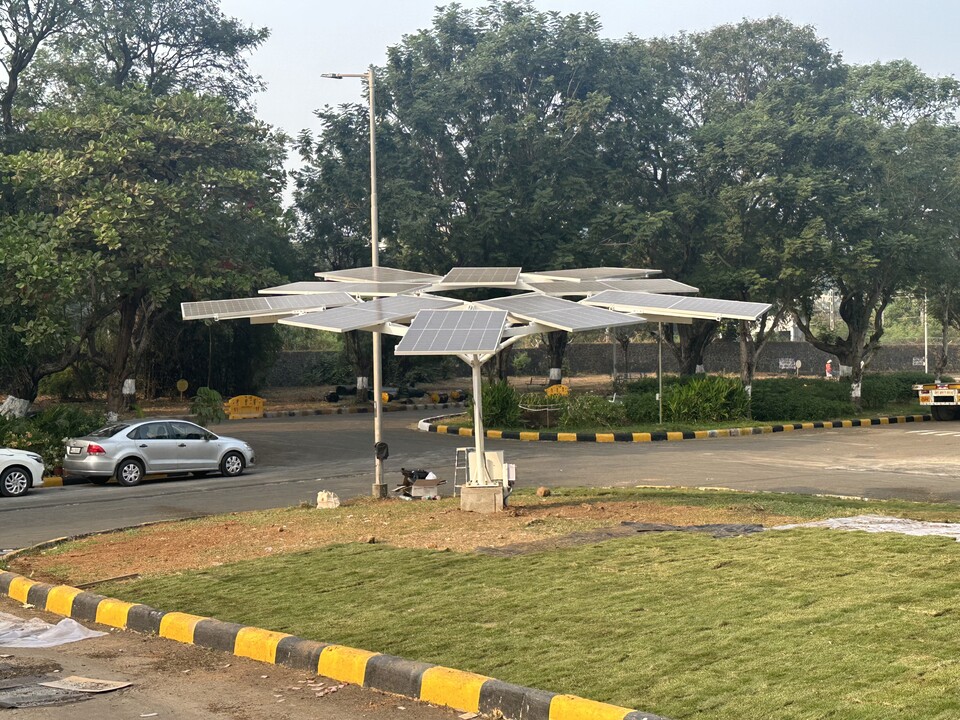
At the heart of Mumbai’s bustling Vikhroli, a silent green revolution is taking place at the M/s. Godrej site, courtesy of the remarkable Sol Tree installation. This innovative solar structure stands tall, not just in physical stature but also in its remarkable contributions to sustainability and energy efficiency. Harnessing Nature’s Power The Sol Tree is no ordinary solar panel system; it’s a 5kWp marvel generating a whopping 7300 units of electricity annually. In doing so, it effectively reduces coal consumption by an impressive 6.75 metric tons per year. What’s more, this environmentally conscious creation equals the carbon-offsetting power of 312 natural trees, effectively combating carbon footprints and championing green energy. Aesthetic Elegance Meets Functionality Beyond its functional prowess, the Sol Tree seamlessly integrates with its surroundings, blending effortlessly into the garden landscape. Its elegant design not only serves a practical purpose but also enhances the visual appeal of the site. Space-Saving Innovation One of the most striking features of the Sol Tree is its space efficiency. Requiring only 4 square feet of land to generate up to 15kW of solar energy, it starkly contrasts the 730 square feet of land needed for a ground-mounted solar plant of similar capacity. This substantial land-saving potential offers opportunities for agricultural cultivation, effectively optimizing land usage. Conclusion: A Beacon of Sustainability In a world racing against time to combat climate change, the Sol Tree stands tall as a beacon of sustainability. Its multifaceted contributions, from carbon offsetting and space efficiency to rural empowerment, make it a symbol of innovation and progress in the realm of renewable energy. Godrej Vikhroli’s commitment to embracing such cutting-edge technology highlights a paradigm shift toward a more sustainable future. The Sol Tree isn’t just an installation; it’s a testament to the power of human innovation in harmonizing with nature. As we look ahead, let the Sol Tree by West Coast Engineering Works Pvt Ltd at Godrej, Vikhroli be a reminder that every small step towards sustainable energy brings us closer to a greener, more prosperous tomorrow. Article authored by J.M.Shah & Sailee Satish ANGANE This article celebrates the technological marvel that is the Sol Tree, showcasing its impact and potential in revolutionizing sustainable energy solutions.
The Battle of Green Giants: Solar Trees vs. Ground mounting Structure
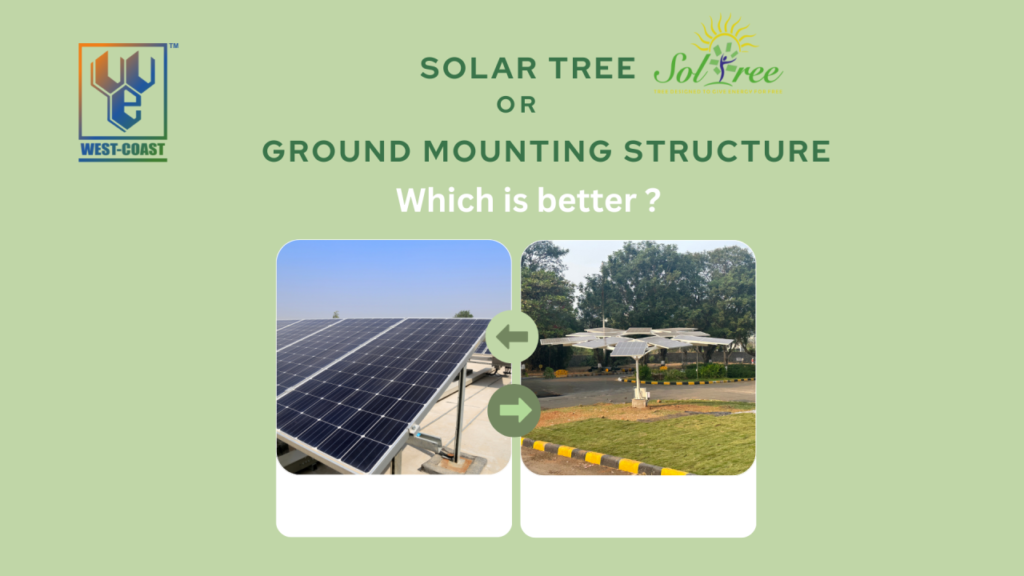
As the world seeks sustainable energy sources, solar power stands tall as a beacon of hope. In the quest to harness sunlight efficiently, two innovative approaches have emerged: Solar Trees and Ground Mounting Structures (Conventional Solar Parks). But which one holds the key to a greener future? Let’s delve into the captivating showdown between these eco-friendly contenders. Land Usage: Solar Trees take the lead by requiring a negligible portion of land compared to their conventional counterparts. Their adaptability to unused areas like expressways, highways, and airports showcases a creative utilization of space, minimizing land acquisition costs and avoiding the need for extensive land clearing. On the other hand, Ground Mounting Structures demand larger contours of land, necessitating land levelling, clearing, and dedicated space, increasing development costs and land acquisition expenses. Cost Efficiency: While Solar Trees boast a simpler design that reduces project costs by considering land requirements, Ground Mounting Structures (Conventional Solar Parks) tend to be more expensive due to higher land acquisition costs stemming from their straightforward design. Project Infrastructure: Solar Trees stand out for their sophisticated structure design, which not only functions efficiently but also offers the potential for aesthetic enhancement. Conversely, Ground Mounting Structures maintain a simple design without much room for improvement. Solar Absorption: The efficiency of Solar Trees shines through with their ability to absorb more irradiance per square meter compared to Conventional Solar Parks. This enhanced absorption potentially translates to increased energy production. Power Evacuation: A notable advantage of Solar Trees lies in their ability to evacuate power conveniently along highways, reaching small villages, agricultural feeders, EV charging stations, railway substations, and industries en route. Ground Mounting Structures, however, require dedicated substations for power evacuation, making their infrastructure more complex. Conclusion: In the ultimate clash between these green giants, Solar Trees emerge as innovative, space-saving, aesthetically pleasing, and cost-effective alternatives to traditional Ground Mounting Structures (Conventional Solar Parks). Their adaptability to diverse locations and enhanced efficiency in power evacuation make them a frontrunner in the race towards sustainable energy solutions. Whether casting shade beneath Solar Trees or basking in the efficiency of Ground Mounting Structures (Conventional Solar Parks), the choice ultimately lies in embracing renewable energy’s promise and taking a step closer to a brighter, greener future.